Broke and Talented: How Competitive Gaming's Hidden Price Tag Is Shutting Out America's Tier-2 Players
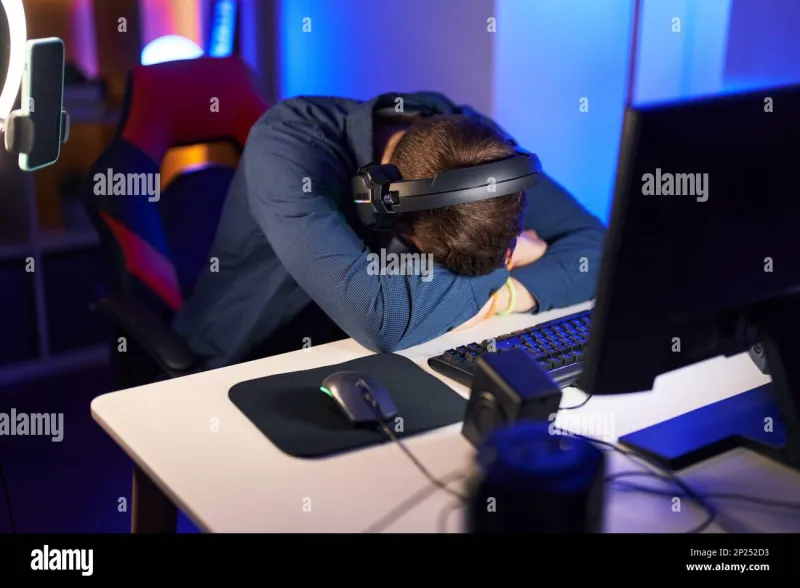
Photo: young gamer working at desk with gaming PC financial stress, via c8.alamy.com
There's a version of the esports dream that doesn't make it into highlight reels. It doesn't trend on Twitter, and nobody's dropping a sponsored YouTube doc about it. It lives in the Discord DMs of players who are genuinely good — regionally ranked, tournament-tested, maybe even scouted once or twice — who are slowly realizing the math doesn't work out.
This is the tier-2 trap. And it's eating the future of American competitive gaming alive.
The Bill Nobody Talks About
Let's start with the basics, because most people outside the grind have no idea what it actually costs to compete seriously in the US esports ecosystem below the franchise level.
A competitive-grade gaming PC — the kind that won't bottleneck you in a ranked match that matters — runs anywhere from $1,500 to $2,500 depending on specs and the current GPU market. Peripherals add another few hundred on top of that. A stable, low-latency internet connection in a market where fiber isn't always available? That's a monthly bill that varies wildly depending on your zip code. And if you're trying to compete at LAN events — the tournaments that actually get you seen by org scouts — you're looking at travel costs, hotel rooms, and entry fees that can stack up to $800 or more per event, per player, several times a year.
Then there's coaching. Private coaching sessions with a credentialed coach who's worked in pro environments run $50 to $150 an hour. Teams below the org level often split those costs, but "splitting" a bill you can't afford is still a bill you can't afford.
Marcus, a 21-year-old Valorant player out of Atlanta who asked us to use only his first name, broke it down plainly: "I spent close to four grand last year just trying to stay competitive. Travel, coaching, upgrades. I work part-time at a warehouse. Do the math. That's not sustainable."
He peaked at Immortal 3, got interest from two tier-2 orgs, and then had to turn down a roster spot because the team required players to be available for a six-week bootcamp — unpaid — in another state. He couldn't take that much time off work.
The Pay-to-Compete Pipeline
What's emerging in the mid-tier esports scene isn't a meritocracy — it's closer to a financial audition. The players who advance aren't always the best. They're often the ones who can absorb the losses.
Orgs at the tier-2 level frequently operate with minimal infrastructure. Player stipends, when they exist at all, often range from $200 to $500 a month — not enough to cover living expenses in most US cities, let alone the ancillary costs of staying competitive. Some rosters operate on zero pay, with the pitch being "exposure" and the hope of getting picked up by a bigger org.
That model works if you have financial support from somewhere else. It falls apart if you don't.
Sophia, a 23-year-old CS2 player from the Pacific Northwest, spent two years grinding tier-2 circuits. She was ranked in the top 500 on FACEIT at her peak. "The orgs I talked to were upfront — there was no salary. They'd cover some travel if we made it to a certain stage, but that was it. I was working doubles on weekends just to fund my own competitive career. Eventually I had to ask myself: what am I actually building here?"
She stepped back from competitive play earlier this year. She still plays, but the org dream is on pause.
Structural Gaps Nobody's Fixing
The esports industry has talked about player welfare for years. The conversation usually centers on top-tier pros — franchise player salaries, mental health resources for marquee rosters, burnout at the highest level. That's a real conversation worth having. But it leaves an entire tier of the competitive ecosystem completely unaddressed.
There's no equivalent of a minor league baseball stipend system in esports. There's no structured development pathway with guaranteed minimum compensation. The few academies that exist are attached to franchised orgs, and spots in those programs are scarce and competitive in ways that still favor players who've already had access to premium coaching and hardware.
Game publishers have the leverage to change this. Riot, Valve, Activision — these companies generate enormous revenue from the competitive ecosystems built around their titles. Some have invested in grassroots programs, but critics argue those investments are more about optics than structural reform. A $50,000 grassroots fund spread across a national scene is a press release, not a solution.
What Happens to the Talent That Falls Through
Here's the part that should bother anyone who actually cares about competitive gaming's future: the players getting priced out aren't scrubs. They're the ones who would've been the next wave.
When financial barriers determine who gets to develop in a competitive environment and who doesn't, you end up with a talent pool that skews toward players with disposable income or family support — not necessarily the hungriest, most creative competitors. That's bad for the scene. It narrows the gene pool of playstyles, strategies, and raw mechanical ceilings that make elite esports worth watching.
Darius, a 19-year-old Rocket League grinder from rural Ohio, said it simply: "The guys I lose to in ranked aren't always better than me. Sometimes they just have better setups, better coaching, more time because they don't work. It's not always about skill. That's kind of a messed-up thing to realize."
He's right. And until the industry builds something that actually catches the players falling through the cracks, the void isn't just a brand — it's where American esports talent goes to disappear.