Quarter Machines to Million-Dollar Stages: The Gritty Underground Origins of American Esports
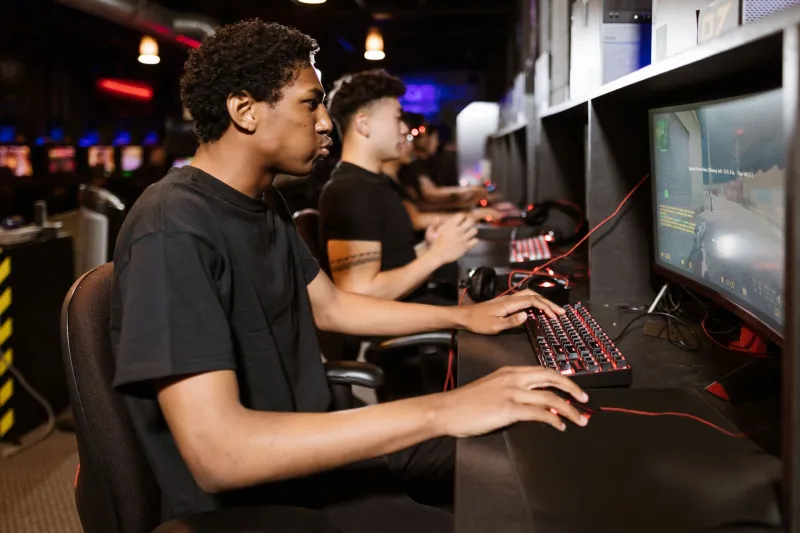
Picture this: a strip mall somewhere in suburban Ohio, sandwiched between a nail salon and a Subway. Inside, twenty-four CRT monitors are crammed onto folding tables, a tangle of ethernet cables running across the carpet like roots. The air smells like Mountain Dew and ambition. Outside, nobody knows this place exists. Inside, some of the most competitive players in the country are grinding.
That's where it started. Not in a boardroom. Not in a venture capital pitch deck. In places like that.
American esports didn't get handed to us. It was built in the dark, by people nobody was paying attention to, long before anyone thought there was money in it. And the fact that we now have sold-out arenas, franchise leagues, and prize pools that rival traditional sports tournaments? That's a direct line back to those folding tables.
The LAN Cafe Era Was Wilder Than You Remember
If you were gaming in the late 1990s or early 2000s, LAN cafes were the closest thing to a real competitive gaming infrastructure that existed in the US. They were everywhere for a minute — over 1,500 at the peak, by some estimates — and they served a purpose that goes way beyond just giving kids a place to play Counter-Strike after school.
They were community hubs. They were where local scenes formed. You'd walk in as a stranger and leave with a crew. Tournaments happened on weekends, sometimes with cash prizes scraped together from entry fees, sometimes just for bragging rights. The bragging rights mattered more anyway.
Places like Cyber Zone in Los Angeles, or GameWorks locations scattered across the Midwest and South, became proving grounds for players who had no other outlet for serious competition. There were no streaming platforms. No social media. No way to go viral. If you were good, the people in that room knew it — and that was enough.
The organizers running these events weren't getting paid well, if at all. They were doing it because someone had to. They built brackets by hand. They handled disputes. They sourced their own equipment. And they created the culture of competitive integrity that would eventually define what American esports looks like at the pro level.
The Unsung Architects Nobody Talks About
When people write the history of American esports, they tend to start with organizations like MLG — Major League Gaming, founded in 2002 — or the first big Halo and StarCraft tournaments that got TV deals. That's fair. Those moments were real milestones.
But MLG didn't appear from thin air. It was built on top of a decade of local organizers, regional leagues, and community tournament runners who had already proven that American players would show up and compete seriously if you gave them a structure to compete in.
People like the regional coordinators who ran Fighting Game Community (FGC) events out of Denny's parking lots. Or the college students who organized dorm-room Halo tournaments that somehow became campus-wide events. Or the guys running weekend StarCraft BW ladders in the Pacific Northwest before most Americans even knew what a ladder was.
These weren't famous people. They didn't get sponsorships. A lot of them are still just regular folks with day jobs. But without them, there's no pipeline. There's no culture. There's no sense that competing seriously at games is something Americans do.
The Game That Changed the Trajectory
Counter-Strike deserves its own paragraph in any honest history of American grassroots esports. When 1.6 hit its stride in the early 2000s, it created something genuinely new in the US gaming landscape: a team-based competitive game that required real coordination, communication, and strategic depth — and that anyone with a decent PC and an internet connection could access.
Local CS tournaments were a different animal from what came before. Five-man squads. Real tactics. Hours of practice. Teams started forming with actual names, actual rosters, actual rivalries. Some of those rivalries ran so deep that players from that era still talk about them today.
The culture that formed around early CS competition — the emphasis on team chemistry, the respect for game sense over raw mechanical skill, the understanding that mental toughness was part of the package — is basically the DNA of American esports culture as it exists today. You can draw a direct line from a 2003 LAN tournament in Atlanta to the way EG or Liquid structures their rosters in 2024.
From Grassroots to Franchise Leagues: What Got Lost, What Got Gained
Here's where the story gets complicated, and it's worth being honest about it.
The professionalization of American esports was inevitable and, in most ways, a good thing. Players now have salaries, benefits, coaching staffs, and mental performance support. Prize pools have exploded. The infrastructure that exists today would have seemed like science fiction to the guys running LAN cafes in 2001.
But something shifted when the money came in. The franchise model that now governs leagues like the Overwatch League and the LCS replaced open competition with a closed system that costs millions just to get a seat at the table. Regional scenes that once fed talent directly into national competition got squeezed. The path from local grinder to pro player got longer and less clear.
Veteran community organizers will tell you this directly if you ask them. The scene is bigger. It's also more corporate. The question of whether grassroots culture can survive inside a franchise ecosystem is one the community is still actively wrestling with.
That said, the grassroots scene never actually died. It adapted. Valorant's Challengers circuit, Riot's deliberate investment in regional competition, the growth of amateur leagues on platforms like Battlefy — these are signs that the infrastructure is trying to reconnect with its roots. The local organizer hasn't been replaced. They've just been given new tools.
Where the Grind Goes From Here
The next wave of American esports talent isn't coming from franchise academies alone. It's coming from the same place it always has — kids in their rooms, grinding ranked, competing in regional tournaments, building crews in Discord servers the same way an earlier generation built them in LAN cafes.
The medium has changed. The spirit hasn't.
America's esports empire was never supposed to exist, according to anyone paying attention in 1999. It got built anyway, by people who didn't ask for permission and didn't wait for infrastructure that wasn't coming. That's the actual origin story. And the next chapter is being written the same way — one local tournament, one unsponsored team, one obsessed player at a time.
The void was always full of competitors. The world just finally started watching.