They Got Cooked on Stream — Then Came Back Harder: 10 US Streamers Who Flipped the Script
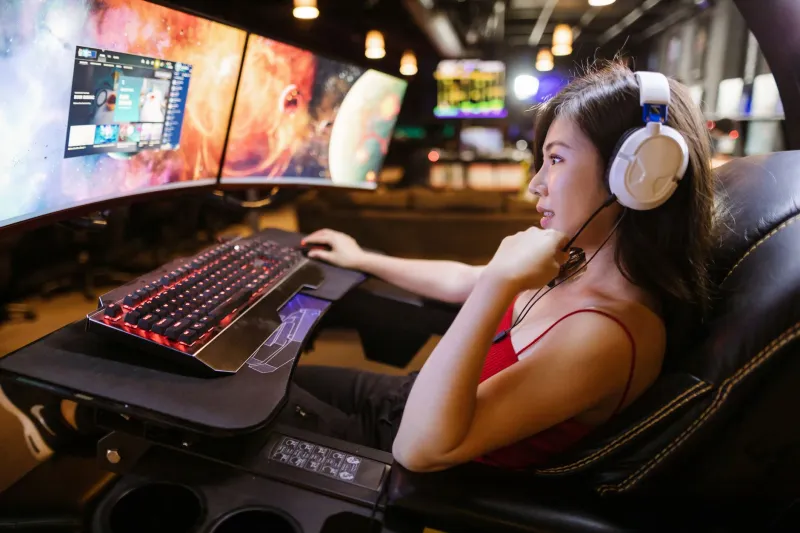
There's a specific kind of pain that only exists in competitive gaming: losing in public, repeatedly, with thousands of people watching and clipping every death. The internet doesn't forget, and the gaming community especially doesn't let you forget. For most people, that's where the story ends—a quiet log-off and a pivot to something easier.
But for these ten American streamers and players, the lowest point wasn't a ending. It was a setup.
This is about owning your worst moments and weaponizing them. KillVoid style.
1. Tyler "Ninja" Blevins — The Relevance Drought
It's easy to forget that Ninja, the most mainstream-famous gaming personality in American history, went through a genuinely rough public stretch after his Mixer exclusivity deal collapsed when Microsoft shut the platform down in 2020. He returned to Twitch to a fragmented audience, faced constant comparisons to his 2018 peak, and watched newer creators eat into the cultural space he once dominated.
Instead of chasing the old numbers, Ninja leaned into competitive Fortnite events, stayed consistent, and let his genuine skill do the talking. He rebuilt his presence without trying to manufacture the old hype. The comeback wasn't explosive—it was steady, and that made it more impressive.
The low point: Platform collapse, public narrative of irrelevance. The flip: Consistent competitive content and community re-engagement over years, not weeks.
2. Soulja Boy — The Gaming Credibility Spiral
Okay, hear us out. Soulja Boy's foray into streaming and the gaming space was publicly mocked from nearly every angle—his console venture flopped spectacularly, his gameplay clips became meme fuel, and the internet treated his gaming persona as a punchline. But Soulja kept showing up. He continued to stream, continued to engage with gaming culture on his own terms, and eventually carved out a niche that was authentically his. He didn't win everyone over. He didn't need to. He stayed in the void and kept playing.
The low point: Console scandal, universal gaming credibility mockery. The flip: Persistence built a genuine audience that respected the audacity.
3. TimTheTatman — The Warzone Identity Crisis
TimTheTatman's audience grew massively during the early Warzone era, but when his performance dipped and the meta shifted, a vocal segment of his community started questioning whether the entertainment value could carry without the wins. He went through a visible rough patch—on-stream frustration, public self-deprecation that started to feel less like a bit and more like genuine doubt.
What Tim did next was smart: he leaned into the authenticity of the struggle. He talked about it openly, didn't manufacture fake confidence, and grinded his way back to competitive shape while keeping his community in the process. His return to form after signing with OpTic Gaming gave him a structural home that matched his energy.
The low point: Performance decline during peak Warzone era scrutiny. The flip: Radical transparency plus organizational support reignited his competitive identity.
4. Tfue — The Contractual Nightmare and Ranking Falloff
Turner "Tfue" Tenney was arguably the most mechanically gifted Fortnite player the US scene produced during the game's peak. Then came the public FaZe Clan lawsuit, a brutal period of personal and professional turbulence, and a visible decline in his competitive results. The community that once treated him as untouchable started questioning if the flame had gone out.
Tfue's response was to step back from Fortnite entirely, experiment with other titles, and return on his own schedule rather than the internet's. When he came back, it was without apology. The authenticity of his grind reminded people why they cared in the first place.
The low point: Legal drama, competitive falloff, public scrutiny of his decline. The flip: A deliberate reset that prioritized genuine passion over performance pressure.
5. Pokimane — The "Parasocial" Pile-On
Pokimane has faced coordinated harassment campaigns and public criticism cycles that would have ended most careers. A particularly brutal stretch involved viral criticism of her content quality, accusations of coasting on her audience, and targeted harassment from multiple directions simultaneously. The pile-on was loud, sustained, and very public.
She didn't collapse. She diversified—launched OfflineTV projects, expanded her creative output, and built institutional infrastructure that made her independent of any single platform or community mood. The criticism ultimately accelerated her evolution from streamer to media entrepreneur.
The low point: Multi-front harassment and content quality criticism. The flip: Built infrastructure that made her immune to any single narrative.
6. Nickmercs — The Competitive Credibility Rebuild
Nickmercs built his brand on being a legitimate competitive threat while maintaining a massive entertainment audience—a difficult balance that started to wobble when his Warzone performance became inconsistent and critics suggested he was prioritizing content over competition. The tension between entertainer and competitor became a public storyline.
Nick leaned into the grind publicly, brought training partners onto stream, and made the rebuild itself the content. Watching someone work to get better, with receipts, is compelling television. His eventual return to elite-tier performance in multiple BR titles reestablished the competitive credibility his brand needed.
The low point: Public questioning of competitive legitimacy. The flip: Made the grind visible and let the results speak.
7. DrLupo — The Post-Mixer Rebuild
Like Ninja, Benjamin "DrLupo" Lupo took the Mixer deal and faced the platform's collapse. Unlike Ninja, Lupo had less mainstream recognition to fall back on, making his rebuild a quieter but arguably more impressive story. He returned to Twitch without the fanfare of a superstar comeback, focused on community-first content, and rebuilt his audience through consistency and charity work.
His pivot toward YouTube Gaming and sustained streaming schedule demonstrated that audience loyalty built on genuine connection doesn't evaporate just because the platform does.
The low point: Mixer collapse with less safety net than bigger names. The flip: Community-first rebuilding that proved genuine connection outlasts platform drama.
8. Cloakzy — The Shadow of Tfue
Dennis "Cloakzy" Lepore spent years as one of the most mechanically skilled Fortnite players in the US scene, but his partnership with Tfue meant he often existed in the shadow of someone the community treated as a singular talent. When their dynamic shifted and Cloakzy stepped out on his own, the transition wasn't seamless—there was a period where his individual identity as a creator and competitor felt undefined.
Cloakzy's response was to double down on his personality and expand beyond Fortnite. He developed a streaming identity that wasn't dependent on proximity to another star, built his own competitive narrative, and came out the other side with an audience that followed him specifically.
The low point: Identity defined by proximity to another player. The flip: Carved out a solo brand identity through personality-forward content.
9. Symfuhny — The "Carry or Quit" Moment
Mason "Symfuhny" Lamont has the mechanical skills that make other players uncomfortable, but there were stretches—particularly during Warzone's chaotic mid-life meta shifts—where his results didn't match his reputation and his stream reflected genuine frustration. The community noticed, and the discourse got pointed.
Sym's comeback was mechanical: he identified the specific skill gaps the new meta exposed, worked on them deliberately, and streamed the improvement process. It's a template that works because it's honest. No excuses, no rebranding. Just getting better on camera.
The low point: Meta shifts exposed gaps in his adaptability. The flip: Public, transparent skill development that turned the process into compelling content.
10. Swagg — The Hype-to-Results Gap
Kris "Swagg" Lamberson built serious momentum as one of the most entertaining Warzone personalities in the US scene, but when his results started lagging behind the hype and critics began pointing out the gap between his content persona and his actual competitive output, the pressure mounted. The "is he actually that good?" discourse is brutal in gaming communities.
Swagg's answer was to enter competitive events, put his gameplay in environments with real stakes, and stop letting the question go unanswered. The willingness to be tested publicly—and to take losses publicly—ultimately silenced more critics than any highlight reel could have.
The low point: Credibility gap between entertainment persona and competitive results. The flip: Sought out competitive accountability instead of avoiding it.
The Pattern Nobody Talks About
Look across all ten of these stories and something consistent emerges: the comeback didn't come from image management. It came from engagement with the problem. Every single one of these players and creators faced their low point rather than routing around it.
That's the KillVoid principle in practice. You don't own the void by pretending it isn't there. You own it by walking straight into it and building something on the other side.
Your worst streak isn't your story. What you do next is.