No Days Off, No Shortcuts: Inside the Savage Training Labs of America's Most Dangerous Pro Gamers
No Days Off, No Shortcuts: Inside the Savage Training Labs of America's Most Dangerous Pro Gamers
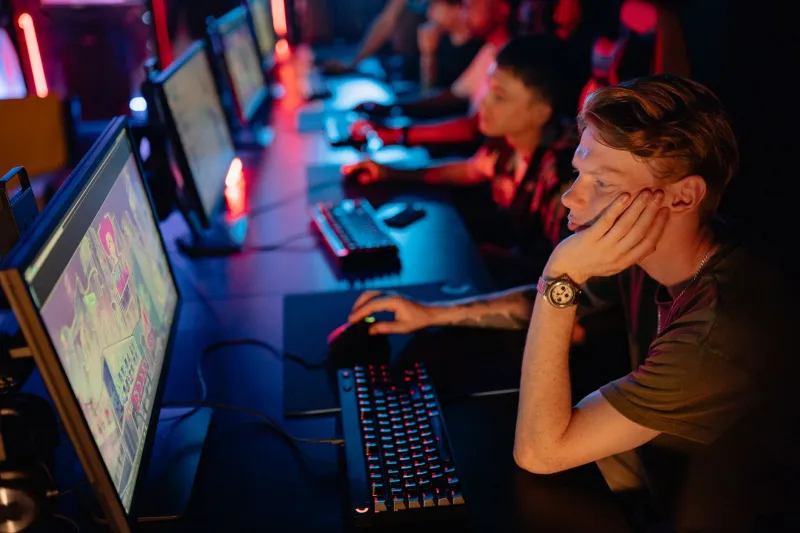
There's a version of competitive gaming that lives in the public imagination — a teenager hunched over a glowing monitor, Red Bull towers stacking up beside a pile of chip bags, grinding ranked until 4 a.m. on pure instinct and stubbornness. That version still exists. But it's not what's winning anymore.
At the highest levels of US competitive gaming, the training culture has quietly transformed into something that looks a whole lot more like elite athletic preparation. Ice baths. Neurofeedback sessions. Proprioception drills. Eye-tracking software borrowed from military pilot training programs. The players putting in this kind of work aren't doing it for content — they're doing it because the margins between first place and irrelevance are razor-thin, and they've figured out that the brain is a muscle that can be trained just as hard as anything else.
Here's what that actually looks like.
The Cold Plunge Is Not a Bit
When people first heard that certain Valorant pros were ending their sessions with cold water immersion, a lot of the community laughed it off as influencer behavior bleeding into esports. Those people aren't laughing anymore.
The logic isn't complicated once you understand what extended high-focus gaming does to the body. Hours of competition-level concentration creates genuine physiological stress — elevated cortisol, eye strain, muscle tension from static posture, and a nervous system that stays in a heightened state long after the session ends. Cold exposure, particularly immersion in water between 50–59°F for 10–15 minutes, has documented effects on cortisol regulation and parasympathetic nervous system recovery. Several performance coaches working with mid-tier to top-tier US orgs have quietly integrated cold plunge protocols into their players' post-session routines, not as a wellness gimmick, but as a legitimate recovery tool.
One performance director working with a Tier 1 NA roster — who asked to stay anonymous because his org doesn't publicize its methods — described it simply: "We started tracking sleep quality metrics after we introduced cold exposure. The data was pretty hard to argue with. Players were hitting deeper sleep cycles on recovery nights. That matters when you're playing six hours of competitive a day."
Eye-Tracking Drills Straight Out of a Fighter Pilot's Handbook
Reaction time gets all the headlines, but elite players and their coaches will tell you that visual processing is where games are actually won and lost. Specifically, the ability to control where your eyes move — and how fast they acquire and lock onto relevant information — is a trainable skill that separates mechanical players from truly dangerous ones.
Several US-based coaches have started incorporating eye-tracking software originally developed for military and aviation training into their players' daily routines. Programs like EyeGym and various proprietary tools used in tactical decision-making research help players identify fixation habits, saccadic movement patterns, and visual search efficiency. In plain language: where are your eyes actually going during a gunfight, and is that the right place?
A CS2 coach who runs a private performance lab in Austin described working with a player who had elite mechanical stats but was consistently losing clutch situations. "His aim was fine. His movement was fine. But when we ran the eye-tracking data, he was fixating on the wrong parts of the screen during high-pressure moments — looking at his crosshair instead of enemy positioning cues. That's a habit. And habits can be reprogrammed."
The drill itself involves guided visual scanning exercises performed both in-game and through standalone software, training players to develop more efficient eye movement patterns under simulated pressure conditions. It sounds abstract until you watch a player's clutch rate improve by double digits over a two-month period.
Reaction Apps the Military Uses — and Pros Have Stolen
Platforms like Aim Lab and KovaaK's get most of the attention in the gaming space, and they're genuinely useful. But some of the more obsessive trainers in the US competitive scene have gone further, pulling from tools designed for law enforcement and military operators.
Apps like Axon's training suite and certain modules within the NeuroTracker platform — originally built to help special operations personnel improve situational awareness and decision speed — have found their way into esports training stacks. NeuroTracker in particular, which involves tracking multiple moving objects in 3D space to improve cognitive load capacity, has been adopted by several performance-focused coaches who work with FPS and battle royale players.
The premise is that games like Warzone or Apex Legends at a high level aren't really aim tests — they're information processing tests. How much data can you absorb, prioritize, and act on simultaneously? Training that cognitive bandwidth directly, rather than just playing more ranked, is a fundamentally different approach. And for the players who have committed to it, the results show up in the one stat that doesn't lie: win rate.
The Sleep Architecture Obsession
If cold plunges are the flashy part of elite gaming recovery, sleep optimization is where the real obsessives live. A growing number of top US players track their sleep data with the same intensity they track their in-game stats — using devices like the Oura Ring or WHOOP band to monitor HRV (heart rate variability), REM cycles, and sleep staging.
The goal isn't just getting more hours. It's engineering sleep quality with the same intentionality as a training session. That means strict light discipline in the hours before bed, temperature-controlled sleep environments, and in some cases, working with sports nutritionists to time carbohydrate intake in ways that support melatonin production.
One Rocket League competitor who trains out of a facility in Los Angeles described his pre-sleep routine as non-negotiable: "I don't touch a screen for 90 minutes before I sleep. I do a 10-minute breathing protocol. My room is 67 degrees. People think that's crazy. But I track my cognitive performance scores every morning, and the correlation between a good night's sleep and my decision speed the next day is basically perfect."
This Is a Discipline, Not a Hobby
What ties all of these practices together is a fundamental shift in how America's most serious competitive players are conceptualizing what they do. This isn't grinding for fun. It's not even grinding for clout. It's deliberate performance engineering, applied to a domain that the mainstream still underestimates.
The players who are putting in this kind of work aren't doing it because they read a wellness blog. They're doing it because they've run into the ceiling of what raw practice hours can achieve, and they've gone looking for the next edge. Sometimes that edge is a cold plunge. Sometimes it's a military eye-tracking protocol. Sometimes it's just sleeping in a dark, cold room and being ruthless about it.
The void doesn't care how hard you grind if you're grinding wrong. The players who understand that — who've turned their bodies and brains into actual performance systems — are the ones building legacies while everyone else is still stacking energy drink cans and calling it a training plan.