From the Void Back to Victory: How Elite US Gamers Rebuilt Their Mental Game After Hitting Rock Bottom
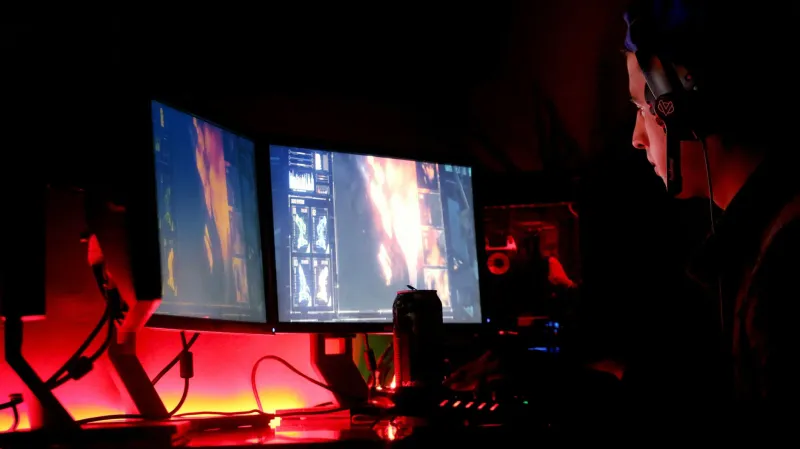
There's a version of the esports grind nobody talks about in sponsor announcements. It's the 3 a.m. session where you've dropped seventeen ranked games in a row and you're genuinely unsure whether you were ever actually good, or whether the whole thing was a fluke. It's the clip that goes viral — not because you popped off, but because you completely fell apart. It's the DMs from fans who watched you crumble in real time and felt the need to tell you about it.
For a lot of US competitors and streamers, that moment doesn't just happen once. It becomes a cycle. And for the ones who eventually clawed their way back to elite-level performance, the comeback wasn't about grinding harder. It was about rebuilding something far more fragile: the mental architecture that lets you compete without self-destructing.
The Tilt Spiral Is Real — And It Goes Deeper Than Most People Admit
Tilt gets thrown around so casually in gaming culture that it's almost lost its weight. But anyone who's actually been inside a real tilt spiral knows it's not just frustration. It's a cognitive collapse. Your decision-making narrows. You stop seeing the macro and start reacting to micro-failures with micro-aggression — toward opponents, teammates, and eventually yourself.
Psychologists who've started working directly with esports organizations describe it in clinical terms: it's a stress-response loop where perceived failure triggers emotional flooding, which degrades performance, which generates more perceived failure. The feedback cycle is brutal. And in competitive gaming, it's uniquely punishing because the environment removes almost every natural circuit-breaker. There's no halftime. No locker room. No physical cooldown. Just another queue.
Several high-profile US players have spoken openly about hitting that wall at the worst possible time — during team tryouts, in the middle of content deals, or right when a streaming career was supposed to be taking off. The common thread isn't weakness. It's that nobody had ever taught them what to do when their identity and their in-game performance became the same thing.
Identity Detachment: The Hardest Skill Nobody Teaches You
Here's the core problem: competitive gamers — especially ones who've built audiences around their skill — tend to fuse their sense of self-worth directly to their results. Win and you're valid. Lose and something is fundamentally wrong with you. That equation works fine when you're on a hot streak. It becomes catastrophic when variance catches up.
Sports psychologists entering the esports space have identified identity detachment as one of the most critical — and most overlooked — mental skills for sustainable performance. The concept isn't new; traditional athletes have been working on it for decades. But in gaming, where every loss is potentially clipped, timestamped, and archived forever on the internet, detaching your ego from the outcome feels almost impossible.
The players who've come back from genuine rock-bottom moments describe learning to create what one sports psych consultant working with a mid-tier LCS org called "a third-person relationship with your gameplay." You're not your rank. You're not your KDA. You're a competitor who is currently performing at a certain level, and that level is adjustable. It sounds simple. Executing it under pressure, when your chat is going off and your team is flaming you, is a different story entirely.
One approach that's gained traction in US esports programs is journaling — not the vague "write down your feelings" kind, but structured post-session reviews that separate emotional reactions from tactical observations. The goal is to train the brain to process a loss as data rather than a verdict. Over weeks, that rewiring actually takes hold.
Sports Psychologists Are Finally in the Building
Five years ago, suggesting that a competitive gaming team needed a sports psychologist would've gotten you laughed out of the room in most North American orgs. That's changed. Major teams across Valorant, League of Legends, and Call of Duty have quietly brought mental performance coaches onto their staff, and the results have started shifting the conversation industry-wide.
What's interesting is what these professionals focus on when they actually get inside a team environment. It's rarely about motivation. Most elite players are already obsessively motivated — that's part of the problem. Instead, the work tends to center on emotional regulation, communication under pressure, and building what psychologists call "process goals" versus outcome goals.
Process goals are specific, controllable behaviors: "I'm going to call out every rotation I see in the first two minutes" rather than "I'm going to win this match." For players rebuilding confidence after a slump, this shift is transformative. You can succeed at a process goal even inside a loss. That's not cope — it's a legitimate neurological recalibration that keeps the reward system functioning while performance is still being rebuilt.
What Rock Bottom Actually Feels Like When Everyone's Watching
Talk to any streamer or competitive player who's been through a real low point and they'll tell you the same thing: the public dimension makes everything worse. In traditional sports, your bad games happen in front of thousands. In streaming, they happen in front of your entire community, they get clipped by people who are actively rooting for your failure, and they live on the internet indefinitely.
Several US-based streamers have described the experience as a kind of performance paralysis — where the awareness of being watched during a slump actively prevents the recovery. You start playing for the clip instead of for the win. You make decisions based on how they'll look rather than what they'll accomplish. The audience that used to be a source of energy becomes a pressure system that accelerates the collapse.
The ones who broke that cycle almost universally did the same thing: they found a way to practice without an audience for a period of time. Private lobbies. Unranked alts. Anonymous accounts. Not to hide from accountability, but to rebuild the intrinsic relationship with the game that got them there in the first place. You can't reconnect with why you love competing when every session is a public performance review.
The Comeback Isn't a Moment — It's a System
Here's what the mental performance work ultimately reveals: there is no single turning point. No one session where everything clicks back into place. The competitors who've successfully rebuilt after genuine rock-bottom stretches describe a slow accumulation of small wins — process goals hit, emotional floods navigated, identity anchored somewhere other than the scoreboard.
It's unglamorous. It doesn't make for a great highlight clip. But it's what actually works.
The esports industry is still young enough that mental performance infrastructure is more exception than rule for most US players. The majority are still figuring this out alone, in the dark, at 3 a.m., after their seventeenth loss in a row. The gap between those players and the ones who've had real psychological support isn't talent. It's access to a framework.
If you're somewhere in that void right now — if the losses are stacking and the confidence is gone and you're not sure the game is even worth it anymore — the first thing to understand is that this is a solvable problem. Not a character flaw. Not evidence that you were never good. A solvable problem with a real methodology behind it.
The players who came back from the bottom didn't get there by grinding through the pain. They got there by changing how they thought about what the pain meant.
That's the real meta.