When the Moment Arrives and the Mind Quits: Understanding Why Elite Esports Players Choke on the Biggest Stage
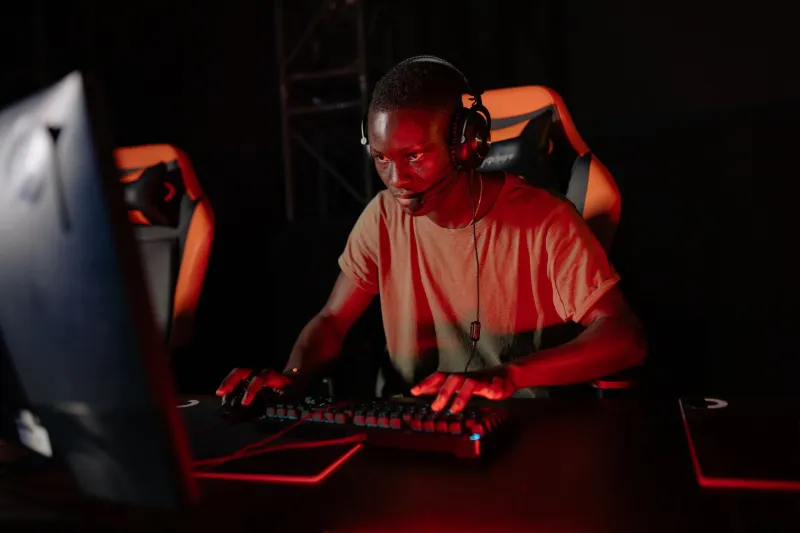
It's one of the most uncomfortable things to watch in competitive gaming. A player who has been dominant all tournament — clean aim, sharp reads, calm comms — suddenly looks like a different person in the final. Missed shots they'd hit with their eyes closed. Hesitation where there used to be instinct. Decisions that make no sense from someone who clearly knows better.
The word the community reaches for is "choke." It's accurate, but it's also incomplete. Choking isn't weakness or fraud. It's a documented psychological and neurological phenomenon, and understanding what's actually happening when elite players crumble under pressure is a lot more complicated — and a lot more interesting — than the memes suggest.
The Neuroscience of Falling Apart
To understand why players choke, you have to understand how skill actually works in the brain.
When a player has practiced a mechanical action thousands of times — a specific flick, a recoil pattern, a timing window — that skill gets encoded in procedural memory. It becomes automatic. The prefrontal cortex, the part of the brain responsible for conscious thought and decision-making, largely steps aside and lets the motor system handle it. This is why elite players can execute complex sequences without thinking. The body just does it.
The problem is that high-pressure situations — a tournament grand final, a live broadcast moment, a match that could change your career — trigger the brain's threat response. Cortisol and adrenaline spike. The prefrontal cortex, which has been sitting back and letting muscle memory run the show, suddenly reactivates and tries to take control. It starts monitoring movements that were previously automatic. And the moment you start consciously thinking about how to do something your body already knows how to do, execution degrades.
Dr. Alicia Ferren, a sports psychologist who has worked with both traditional athletes and esports competitors, describes it this way: "The very thing that makes elite performance possible — automaticity — is disrupted by conscious interference. High-stakes environments trigger that interference. The player isn't suddenly worse. Their brain is working against their own skill."
This phenomenon has a name in psychology: explicit monitoring theory. And it's one of the leading explanations for why choke moments happen to the most skilled competitors, not just average ones. Paradoxically, the better you are, the more you've built your performance on automaticity — and the more vulnerable you are to having that automaticity broken by the wrong kind of attention.
What It Actually Feels Like From Inside
Players who've experienced public collapses at the tournament level describe a remarkably consistent set of sensations.
Tyler, a 22-year-old Valorant competitor from Dallas who reached the grand final of a regional open last year, remembers the shift happening mid-match. "I was playing fine, then I started thinking about what it meant to win. Like, actually thinking about it during the round. And suddenly my crosshair felt wrong. My timing felt off. I wasn't playing anymore — I was watching myself play. And I was playing like garbage."
That dissociative quality — the sense of watching yourself perform rather than being inside the performance — is a common thread. Players describe feeling detached from their mechanics, hyper-aware of their own heartbeat, suddenly conscious of the crowd or the broadcast camera in ways that consume cognitive bandwidth that should be going toward gameplay.
Another competitor, a 25-year-old CS2 player from Seattle who asked to remain anonymous, described the emotional spiral that follows an early mistake in a high-pressure match. "One bad round and I'm already calculating whether I can still win, what people are going to say, whether the org is watching. I'm not in the game anymore. I'm in my own head running worst-case scenarios. And that's when everything falls apart."
The Difference Between Players Who Thrive and Players Who Freeze
Not everyone chokes. Some players — the ones the community calls "clutch" — seem to elevate under pressure. Their performance doesn't degrade. It sharpens. What separates them?
Research in performance psychology points to a few key factors. One is attentional control — the ability to direct focus toward task-relevant cues and away from threat-relevant ones. Players who choke tend to shift their attention toward consequences, outcomes, and self-evaluation. Players who thrive tend to stay anchored to process — the next shot, the next round, the immediate action in front of them.
Another factor is what psychologists call "challenge vs. threat appraisal." When facing a high-stakes moment, some players interpret it as an opportunity — a chance to prove something, a situation they've trained for. Others interpret it as a threat — a situation where failure is possible and visible. The physiological arousal is similar in both cases, but the mental framing changes everything about how that arousal affects performance.
Dr. Ferren notes that this framing is trainable. "We can work with competitors to deliberately shift their appraisal of high-pressure situations. It's not about eliminating nerves — nerves are performance fuel. It's about what story you tell yourself about those nerves."
What the Esports Industry Is Getting Wrong About Mental Performance
For all the conversation about mental health in esports, there's a gap between awareness and actual intervention. Most orgs at the top level now have access to some form of psychological support, but the quality and focus of that support varies enormously. And below the franchise tier, structured mental performance coaching is essentially nonexistent.
The bigger problem is cultural. Esports has historically treated mental struggles as personal failures — a player "couldn't handle the moment" rather than a player experiencing a documented performance phenomenon that has solutions. That framing discourages players from seeking help and keeps the conversation focused on blame rather than development.
The players who are getting ahead of this — who are actively working with sports psychologists, doing pre-competition routines, practicing pressure simulation in scrimmages — are building a genuine competitive edge. Mental performance isn't soft. In a game where mechanical skill between top competitors is often razor-thin, the player who can stay inside their own performance when everything is on the line is the one who wins.
The choke is real. But so is the work that prevents it.