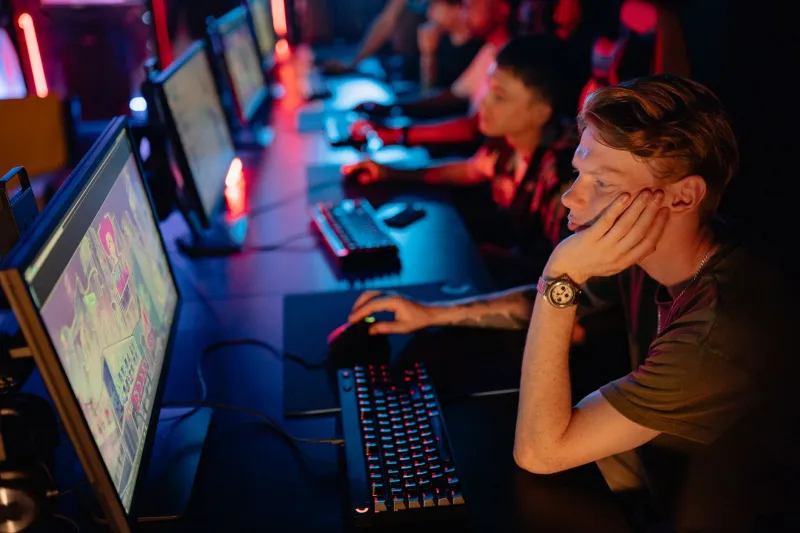
Nobody Mode: Why America's Best Competitive Gamers Are Going Invisible to Get Deadlier

Nobody Mode: Why America's Best Competitive Gamers Are Going Invisible to Get Deadlier
There's a version of every elite American gamer that the public never sees. No stream. No Twitter mentions. No clip compilations. Just a throwaway username — something generic, something forgettable — dropping into ranked lobbies and tearing them apart with zero fanfare. It's not a myth. It's a methodology.
Alias accounts, smurfs, ghost profiles — call them what you want. Inside the competitive gaming community, they've become one of the most quietly accepted tools in a top player's arsenal. And the reasons behind their use reveal something most casual fans don't fully appreciate: playing at the highest level in front of an audience isn't just hard. It's a completely different psychological sport from actually getting better at the game.
The Weight of a Famous Name
When you've built a name in competitive gaming, every match carries baggage. Your opponents know who you are before the loading screen finishes. Some will tilt immediately. Others will go harder than they've ever gone in their lives just to say they beat you. Teammates suddenly feel pressure they didn't sign up for. And if you're streaming, thousands of viewers are watching every misplay, ready to clip it, post it, and dissect it before you've even tabbed back to check your settings.
That environment is brutal for experimentation. You can't freely try an off-meta strategy when 4,000 people are watching and your brand is on the line. You can't grind through a mechanical weakness when every death becomes a highlight reel moment for someone's hate-watch compilation.
This is exactly why the alias exists.
"It's like being able to go to the gym without anyone filming you," said one mid-level Valorant coach who works with several players who use secondary accounts. "You don't want the whole world watching you struggle. You just want to work."
The Practice vs. Performance Split
Sports psychology has known for decades that athletes perform differently under observation than they do in private training. Golfers hit cleaner drives on the range. Sprinters run looser in practice. Gamers are no different — except the observation in esports is constant, public, and often monetized.
Elite players have started treating alias accounts the way pro athletes treat closed practice sessions. It's a space to be bad on purpose, to push mechanics past their current ceiling, to try things that might fail spectacularly before they work. The ranked ladder becomes a laboratory instead of a stage.
There are documented examples throughout American competitive gaming. In the Overwatch community, multiple Grandmaster-level players have been identified on alternate accounts specifically because their movement signatures and decision-making patterns are impossible to disguise, even under a fake name. In League of Legends, high-elo players cycling through alias accounts to test champion pools before committing to them in ranked has been an open secret for years. Apex Legends pros have been caught grinding on ghost accounts in lower lobbies to nail down new legend kits without the immediate pressure of tournament-level scrutiny.
The results speak for themselves. Players who return from extended alias grinds often show up to competitive play with something noticeably sharper — a new movement tech, a cleaner rotation habit, a more confident read on fights. The void produced something real.
Community Reactions: Respect, Resentment, and the Gray Zone
Not everyone is cool with it. The smurf debate in competitive gaming is genuinely complicated, and alias accounts from pro players add another layer of friction.
On one hand, you have lower-ranked players who end up in lobbies with someone operating at a skill level that makes the match essentially unplayable for them. Even if the pro is "experimenting," their floor is still miles above the average Gold or Platinum player. That's a real problem for matchmaking integrity, and a lot of casual players are rightfully frustrated by it.
On the other hand, the competitive gaming community has largely carved out an unspoken exception for serious players using aliases to train. The logic being: if a pro basketball player wanted to shoot around at a public court without being recognized, nobody would call that cheating. It's just practice.
Where it gets murky is when alias accounts cross from personal development into something more strategic — like deliberately sandbagging ranked ratings to get into softer lobbies, or using a ghost account to scout opponents' playstyles before a tournament match. That's where "smart preparation" starts looking like something else entirely, and the competitive gaming community has had to grapple with where exactly that line sits.
Some organizations have started implementing internal policies around alt account usage, particularly around the scouting angle. A few tournament organizers have even quietly started asking teams to disclose known alias accounts ahead of bracket play. It's an evolving conversation with no clean answer yet.
The Psychological Payoff
Beyond the mechanical benefits, there's something genuinely important happening on a mental level when a recognizable name goes ghost.
Identity in esports gets heavy fast. Your gamertag becomes a brand. Your brand becomes a set of expectations. Those expectations become a cage. Players who've been competing at a high level for years often describe a creeping rigidity — a sense that they can't deviate from what made them famous without risking the whole structure they've built.
Alias accounts break that pattern. They're a reset button. For the duration of a session, you're not a content creator, not a roster pick, not someone's favorite player or least favorite player. You're just a username nobody recognizes, figuring out the game the same way you did when you were fifteen and nobody was watching.
That freedom is not trivial. It's the same reason some of the best creative breakthroughs in any field happen when people step outside their established identity and give themselves permission to be a beginner again.
"Every player I've worked with who uses alias accounts comes back from it more confident," said one mental performance consultant who works with esports athletes. "Not because they dominated. Sometimes they got cooked. But they got to fail without it meaning anything, and that changes how they carry themselves when it does mean something."
The Void Has Its Own Rules
Here's the thing about the alias grind that doesn't get talked about enough: it only works if you're honest with yourself about why you're doing it.
Using an anonymous account to dodge accountability is a waste. Using it to protect your ego from hard feedback is counterproductive. But using it as a genuine sandbox — a place to stress-test your weaknesses, build new habits without the pressure of reputation, and reconnect with the version of yourself that just loves competing — that's a legitimate performance tool.
America's top players understand this distinction. The ones who use the void well aren't hiding from the game. They're going deeper into it than the public ever gets to see.
And when they resurface with something new? That's when you see where the real grind happened.